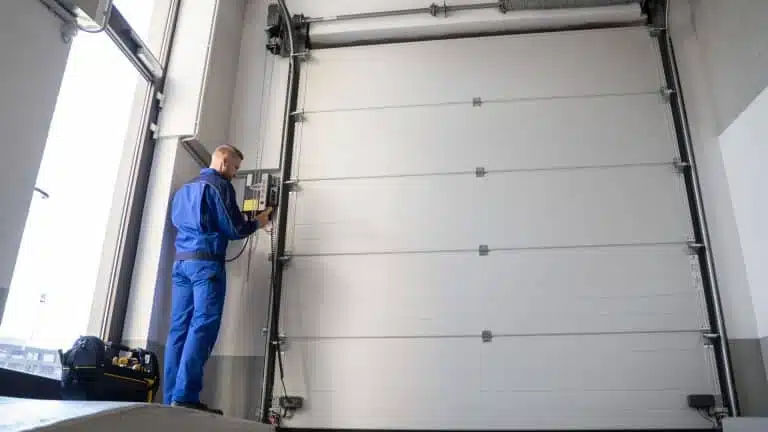
A San Francisco business owner arrives on a Monday morning to find the roll-up door visibly bent, the lock jammed, and no way to tell if someone tried to force it open over the weekend. The security camera only covers the front entrance. The back loading dock? Completely exposed.
This is not a rare situation. It happens to business owners across San Francisco every week, from the warehouses in SoMa to the auto shops in Bayview to the small retail stores lining the Mission District.
A damaged roll-up door is not just an inconvenience or something to deal with “later.” It is an active security threat that can cost a business far more than a simple repair bill.
Yes, a damaged roll-up door can seriously compromise business security by creating easy entry points for intruders, disabling locking systems, and leaving commercial property exposed to both criminal activity and the elements.
Why a Roll-Up Door Is a Business’s First Line of Defense
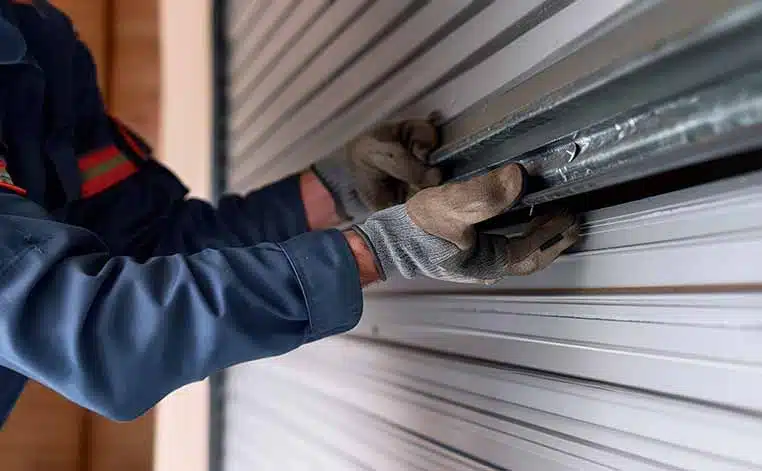
Most people think of alarms, cameras, and padlocks when they think about business security. But the physical barrier standing between a business and the outside world matters just as much, if not more.
Commercial roll-up doors are built differently from residential garage doors. They use heavier gauge steel, industrial-grade locking bars, reinforced tracks, and motor-driven systems designed to handle daily heavy use. In a city like San Francisco, where commercial properties sit in dense urban neighborhoods with high foot traffic, these doors work around the clock to keep businesses protected.
When that door gets damaged, the entire security foundation of the building is weakened. It does not matter how good the alarm system is if the door does not close properly. Opportunistic criminals are not sophisticated. They look for the easiest target on the block, and a visibly damaged roll-up door is exactly the kind of signal they act on.
For a deeper look at the warning signs to watch for, check out this helpful read: Commercial Roll-Up Door Problems: 5 Signs It’s Time for Repair.
7 Ways a Damaged Roll-Up Door Can Compromise Business Security
1. It Creates a Visible Weak Point That Attracts Break-Ins
A dented panel, a gap along the bottom seal, or a door that sits slightly crooked in its tracks does more than look bad. It broadcasts vulnerability to anyone paying attention.
San Francisco’s commercial corridors, especially areas like SoMa, the Tenderloin, and the Mission, see heavy pedestrian and vehicle traffic throughout the day and night. That means a damaged door gets seen by a lot of people. Most of them are just passersby. But it only takes one person with the wrong intentions to turn visible damage into a real break-in.
Criminals are opportunistic. They look for the path of least resistance. A storefront with a damaged roll-up door gets mentally flagged as an easier target than the business next door with a door in perfect condition.
Prevention Tip: Do a quick visual walk-around every Monday morning before opening. Look for new dents, gaps, misalignment, or anything that changed over the weekend. Catching small issues early prevents them from becoming big vulnerabilities.
Noticing unusual sounds along with visible damage? Find out what those noises mean in Why Is My Roll-Up Door Making Grinding Noises.
2. A Damaged Locking Mechanism Is as Good as No Lock at All
This is one of the most misunderstood risks of roll-up door damage. A business owner sees that the lock is still in place, assumes the door is secure, and moves on. The problem is that roll-up door locks do not work in isolation.
The entire locking system, including slide bolts, locking bars, and motor-driven auto-locks, depends on the door frame being properly aligned and the panels sitting flush. When a door takes impact damage or the frame warps over time, the geometry of the door shifts. Locks that once engaged fully may no longer make complete contact with the track or frame.
A door that looks locked from the outside may actually be lifted with minimal force. That is a serious problem for any San Francisco business storing inventory, equipment, or sensitive materials overnight.
What to Check: After any visible impact or damage, manually test the lock by engaging it fully and then applying upward pressure from the outside. If there is any give or if the lock feels stiff and resistant to engage, contact a licensed commercial door technician right away.
Prevention Tip: Never assume a damaged door is still secure just because the lock appears intact. The structural integrity of the door body matters just as much as the lock hardware itself.
A warped frame or misaligned panels can also stop a door from opening the way it should. Learn more about that in What Causes a Roll-Up Door to Stop Opening Fully.
3. Broken Springs or Cables Can Leave a Door Stuck Open
Torsion springs and lift cables are the mechanical engine behind every roll-up door. They carry the weight of the door through every open and closed cycle. And like any mechanical component under constant tension and load, they wear down, weaken, and eventually fail.
When a spring snaps or a cable frays and breaks, the door may not close at all. In some cases, it closes halfway and stalls. In others, it closes but cannot be secured because the tension is gone. Any of these scenarios can leave a business physically open overnight or over a weekend.
For San Francisco businesses in high-activity commercial zones, a door stuck in an open or partially open position overnight is not just a security problem. It is also a liability issue. Anyone can walk in, and the business owner may be held responsible for whatever happens next.
What to Check: Listen closely every time the door cycles. Grinding, popping, uneven movement, or a door that suddenly feels heavier than usual are all early warning signs of spring or cable stress. These sounds do not fix themselves.
Prevention Tip: Spring and cable replacement is not a DIY repair. The tension involved in commercial door springs is extreme and genuinely dangerous to work with without proper training and tools. Always call a licensed commercial door technician for anything involving springs or cables.
4. Sensor and Auto-Close Malfunctions Can Leave a Facility Unprotected
Many modern commercial roll-up doors are equipped with photoelectric sensors and programmable auto-close timers. These features exist specifically to add a layer of security for businesses that cannot always have someone manually closing the door at the end of the day.
When door damage knocks sensors out of alignment or disrupts the motor’s communication with the control board, the auto-close function can fail silently. The system appears to be working, but the door stays open after hours because the sensor keeps detecting a false obstruction.
This is especially risky for San Francisco businesses that depend on auto-close as part of a larger after-hours security setup. If the door does not close automatically and no one is there to catch it, the facility is left completely unprotected until the next morning.
What to Check: Test door sensors at least once a week. With the door in motion toward the closed position, pass an object through the sensor beam path. The door should reverse immediately. If there is a delay or no response, the sensors need to be inspected and realigned.
Prevention Tip: Pair the auto-close system with a connected security camera that sends mobile alerts when the door remains open past a set time. This creates a backup layer of awareness even when no one is physically on-site.
5. Gaps and Panel Damage Create Entry Points for Intruders and the Elements
A full forced entry is not the only way a damaged roll-up door becomes a security risk. Sometimes the danger comes through the small stuff.
Dented or misaligned panels create gaps. Those gaps do not have to be large to be problematic. A gap wide enough for a pry bar is wide enough to compromise the entire door. And San Francisco’s climate adds another layer to this problem.
The city’s coastal fog, consistent wind, and seasonal rain push through damaged panel gaps and worn bottom seals. For businesses storing inventory, electronics, or food products, water intrusion can cause damage that rivals the cost of the door repair itself. For food service businesses operating under San Francisco’s health code requirements, mold resulting from water intrusion can trigger inspections and fines.
What to Check: Perform a light test at night. Close the door completely, turn off the interior lights, and look for any points where outside light bleeds through the edges, corners, or panels. Any visible light means air, water, and potential tool access.
Prevention Tip: Pay special attention to the bottom weather seal. This rubber strip takes the most abuse and wears out faster than other components. Replacing a worn seal is inexpensive and eliminates one of the most common entry points.
6. A Damaged Door Can Void a Business Insurance Claim
This is the risk that catches the most business owners off guard.
Commercial property insurance policies typically include language requiring that the property be “reasonably maintained.” That means if a break-in or weather damage occurs through a door that was already visibly damaged and left unrepaired, the insurance provider may have grounds to deny the claim.
From the insurer’s perspective, the business owner knew about the damage, failed to act, and the resulting loss was therefore preventable. It is a frustrating position to be in, especially after already dealing with a break-in or theft.
San Francisco business owners should read their commercial property insurance policy, specifically looking for language around “premises maintenance,” “entry point security,” and “negligence exclusions.”
Prevention Tip: The moment damage is noticed, photograph it with a timestamp and document when it occurred. Get a professional repair estimate in writing. This paper trail demonstrates that the damage was identified and that steps were being taken to address it, which can make a significant difference if a claim needs to be filed before repairs are completed.
7. It Can Trigger Safety Code Violations in San Francisco
The City of San Francisco enforces commercial property maintenance standards that apply to structural components, including doors. A roll-up door that is non-functional, structurally compromised, or unable to fully close and secure may be flagged during a routine property inspection.
For businesses in regulated industries such as food service, auto repair, or healthcare, the stakes are even higher. A door violation can hold up a permit renewal, result in a fine, or, in serious cases, lead to a temporary forced closure until the issue is resolved.
Proactive maintenance is not just good business practice in San Francisco. It is part of staying compliant with the city’s commercial property standards.
Prevention Tip: Schedule a professional roll-up door inspection at least twice per year. Spring and fall are ideal times, as San Francisco’s seasonal shifts in temperature and moisture can accelerate wear on metal components, seals, and motor systems.
Quick Roll-Up Door Security Checklist for San Francisco Business Owners
Run through this checklist at least once a week. It takes less than five minutes and can prevent a very expensive problem.
- Door closes fully with no gaps along the bottom or sides
- Lock engages completely without resistance or sticking
- No visible dents, cracks, or bent panels on the door face
- Springs and cables show no signs of fraying, rust, or deformation
- Sensors align properly and respond immediately to obstruction tests
- The auto-close timer is functioning correctly if the door is equipped with one
- No unusual sounds such as grinding, popping, or scraping during operation
- The weather seal along the bottom is intact with no cracks, tears, or missing sections
What San Francisco Business Owners Should Do When Damage Is Noticed
Acting quickly after spotting damage is the difference between a manageable repair and a full security incident.
- Step 1: Do not ignore it. Even minor damage in a high-traffic urban environment like San Francisco can escalate quickly. What looks like a cosmetic dent today may be a structural failure point by next week.
- Step 2: Document everything. Photograph the damage immediately with a timestamped image. Note when the damage was first observed and whether any incident, such as a vehicle bump or attempted entry, may have caused it.
- Step 3: Run a manual security check. Test all locks, check that the door closes flush on all sides, and verify that the auto-close function is still working. This determines whether the door is still providing any meaningful security while repairs are arranged.
- Step 4: Call a licensed commercial roll-up door technician. San Francisco has licensed professionals who specialize specifically in commercial door systems. Average repair costs vary based on damage type, including panel replacement, spring repair, track realignment, and motor servicing. Minor repairs are significantly more affordable than full replacements. Catching problems early almost always costs far less than waiting until the system fails completely.
- Step 5: Notify the insurance provider if the damage was caused by a specific incident. A vehicle impact, attempted break-in, or weather event may be covered under a commercial property policy. Reporting promptly and providing documentation protects the claim.
Prevention Tips to Keep a Commercial Roll-Up Door and Business Secure
Staying ahead of damage is always more cost-effective than reacting to it.
- Schedule professional maintenance every six months. San Francisco’s coastal air accelerates corrosion on metal components. Salt particles carried in from the Bay settle on springs, cables, rollers, and hinges, and speed up rust formation. A technician can catch early corrosion before it becomes structural.
- Lubricate moving parts every three months. Springs, rollers, hinges, and tracks all benefit from regular lubrication with a product rated for commercial door systems. This reduces friction, extends component life, and keeps the door cycling smoothly.
- Train staff on proper door operation. One of the most common causes of roll-up door damage is forcing a door that is sticking or making noise, rather than stopping and reporting the issue. Staff should understand that a struggling door is a sign that something is wrong, not something to push through.
- Install physical barriers in loading dock areas. Bollards or dock bumpers near loading dock roll-up doors protect against the vehicle impact damage that is one of the leading causes of commercial door misalignment in San Francisco’s tighter urban loading environments.
- Consider upgrading to a door with smart lock integration or a built-in alarm. Newer commercial roll-up door systems offer connectivity options that send alerts when the door is opened outside of scheduled hours or if forced entry is attempted. For businesses in higher-crime corridors, this upgrade can pay for itself quickly.
Do Not Wait Until a Break-In to Take a Roll-Up Door Seriously
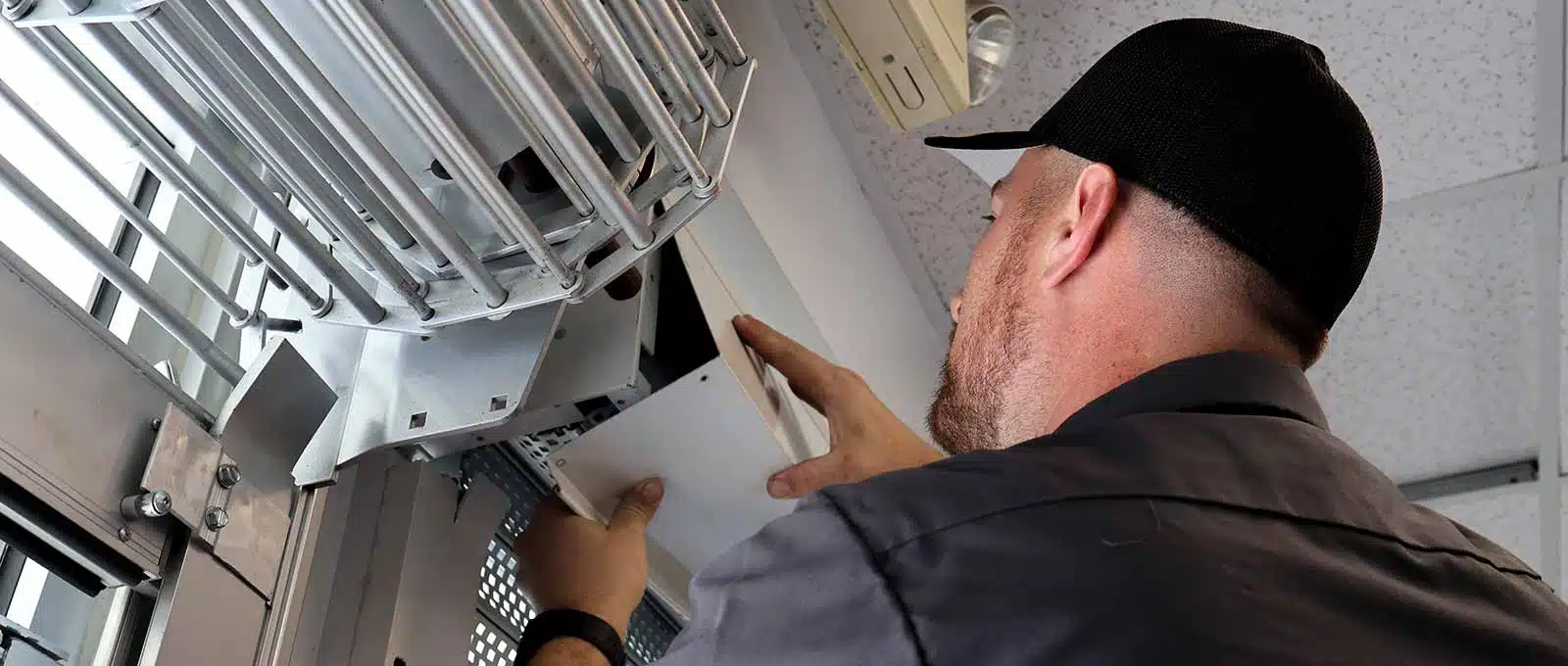
A damaged roll-up door is not just a maintenance issue sitting on a to-do list. It is an active vulnerability that affects business security, insurance coverage, code compliance, and the safety of everyone who works inside that building.
For business owners across San Francisco, from SoMa and the Mission to the Financial District and the Sunset, the physical condition of a commercial roll-up door directly reflects the level of protection a business actually has, not just the level of protection it thinks it has. Just like a commercial hollow metal door, a roll-up door is only as reliable as the condition it is kept in.
The good news is that most roll-up door damage, when caught early, is straightforward and affordable to fix. The risk comes from ignoring it.
Work With a San Francisco Commercial Roll-Up Door Specialist You Can Trust
That is where The Door Doctor comes in. Serving San Francisco businesses with years of hands-on experience in commercial roll-up door repair, maintenance, and replacement, we have built a reputation for fast response times, honest assessments, and quality workmanship that local business owners trust. From a single broken spring to a full door replacement, our team brings the expertise and equipment to get every job done right the first time, keeping businesses protected and operational without unnecessary delays. Do not leave the security of a business to chance. Contact us today or give us a call for a professional commercial roll-up door inspection in San Francisco and get the peace of mind that comes with knowing the first line of defense is built to hold.