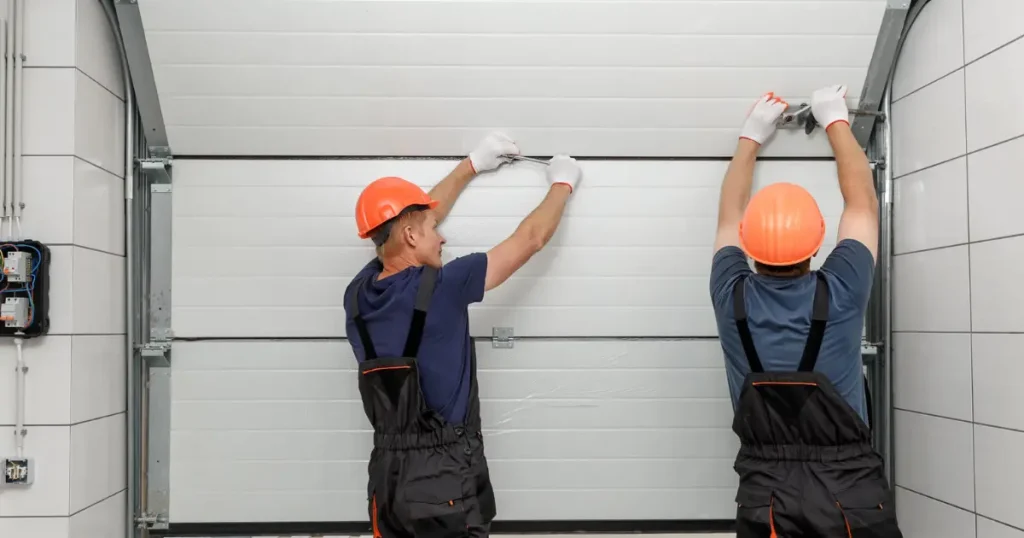
If you live or run a business in San Francisco, you know how much you depend on your roll-up door every single day. Whether it is the door to your garage in the Sunset District or the loading bay at your SoMa warehouse, that door needs to work. So when it starts making a grinding noise, it is hard to ignore, and honestly, you should not ignore it.
That grinding sound is not just annoying. It is your door sending a warning signal. And in most cases, the earlier you catch the problem, the cheaper and easier it is to fix. Left alone, what starts as a minor grind can turn into a door that refuses to open, a snapped spring, or a bent track that needs full replacement.
A roll-up door makes grinding noises most commonly due to worn rollers, lack of lubrication, misaligned tracks, or damaged springs. But there are a few other causes worth knowing about, too, and that is exactly what this guide covers.
How a Roll-Up Door Works (The Simple Version)
Before jumping into the causes, it helps to understand the basics of how a roll-up door operates. Think of it like a roller coaster on a very short track. The door panels are connected and guided by metal tracks on both sides. Rollers attached to the door ride along those tracks as the door opens and closes. Springs handle the heavy lifting by counterbalancing the weight of the door. And the opener or motor is what drives the whole thing up or down when you hit the button.
When all those parts are in good shape and working together, the door moves smoothly and quietly. When even one part starts to wear down or fall out of alignment, friction builds up, and that friction is what creates the grinding noise.
San Francisco’s coastal environment adds another layer to this. The salt air and fog that roll in off the Bay, especially in neighborhoods like the Marina, the Outer Sunset, and along the Embarcadero, accelerate corrosion on metal components. That means doors in the Bay Area tend to wear faster than doors in drier inland climates, making regular maintenance even more important here.
If this is a commercial property, the stakes are even higher. Check out Commercial Roll-Up Door Problems: 5 Signs It’s Time for Repair to know exactly what warning signs to watch for before a small issue shuts down operations.
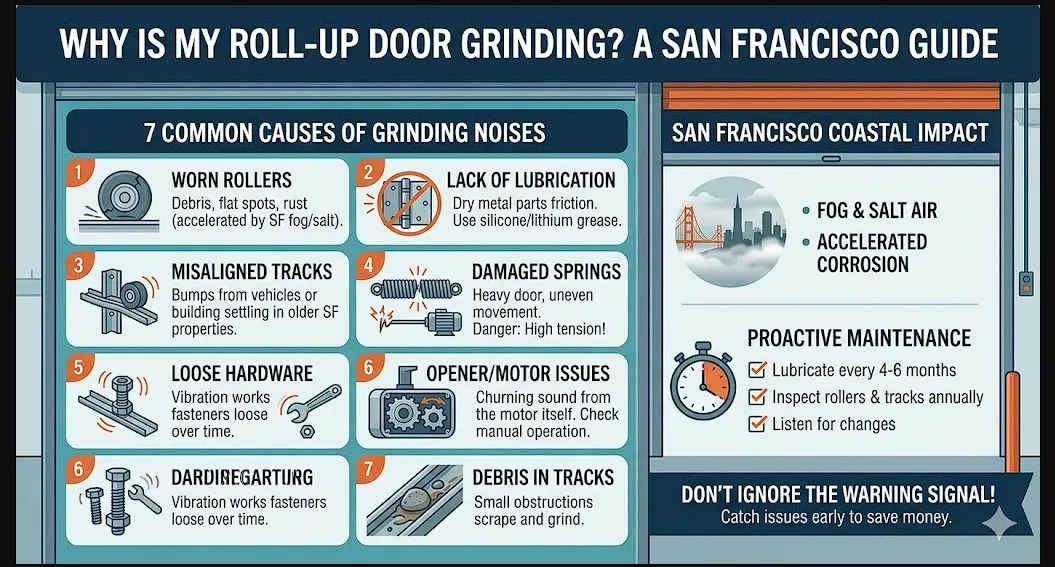
7 Reasons Your Roll-Up Door Is Making Grinding Noises
1. Worn or Damaged Rollers
This is the number one cause of grinding noises in roll-up doors, and it shows up again and again in service calls across San Francisco residential and commercial properties.
Rollers are the small wheels that run along the inside of the track as the door moves. Over time, those wheels wear down. The surface becomes flat, cracked, or chipped. When that happens, instead of rolling smoothly, they drag and scrape against the metal track, creating that grinding or scraping sound you are hearing.
San Francisco’s coastal salt air makes this problem worse. Steel rollers are especially vulnerable to corrosion from the moisture and fog that blanket neighborhoods like the Outer Richmond, Pacifica-adjacent areas, and anywhere near the waterfront. Once rust sets in, the roller surface degrades quickly.
What to check: Take a close look at the rollers along the track while the door is closed. Are any of them visibly cracked, flat on one side, or coated in rust? Those are signs they need to go.
How to avoid it: Rollers have a lifespan of about 5 to 7 years, depending on how often the door is used and what they are made of. Nylon rollers are worth considering because they run quieter than steel and resist corrosion better in humid environments. Replacing them on a proactive schedule prevents the grinding before it starts.
What to do: A professional technician can replace all the rollers on a standard roll-up door in under an hour. The average cost is moderate and completely worth it compared to the damage that worn rollers can cause to the track over time.
Worn rollers do more than create noise. Read Can a Damaged Roll-Up Door Affect Business Security to understand how a compromised door can put an entire property at risk.
2. Lack of Lubrication
Metal parts need lubrication to move without friction. When that lubrication dries out or was never applied correctly, parts start grinding against each other. This is one of the most common and most preventable causes of roll-up door noise.
One mistake that comes up often is the use of WD-40 on garage door parts. WD-40 is a degreaser, not a lubricant. It can actually strip away existing lubrication and leave parts even more vulnerable to friction and rust.
What to check: Pay attention to where the grinding is loudest. Does it happen consistently throughout the full travel of the door, or only at one specific point? If it is consistent, lubrication is likely the issue across multiple contact points.
How to avoid it: Every six months, apply a silicone-based or white lithium grease spray to the rollers, hinges, springs, and the inside of the tracks. For doors in San Francisco neighborhoods close to the water, like the Marina District, Fisherman’s Wharf, or the Dogpatch, consider doing this every four months due to the increased humidity and salt exposure.
What to do: Proper lubrication is one of the few maintenance tasks that a careful property owner can handle on their own. Apply the right product to the right parts, run the door a few cycles, and listen for improvement. If the grinding continues after lubrication, something else is going on, and a professional should take a look.
Skipping lubrication can lead to bigger mechanical problems down the road. If the door is already struggling to move, read What Causes a Roll-Up Door to Stop Opening Fully to find out what else could be holding it back.
3. Misaligned or Bent Tracks
The tracks are the metal channels that guide the door as it travels up and down. Even a small bend, gap, or misalignment in the track creates a point where the rollers grind and struggle to pass through cleanly.
Track problems can happen in a few ways. A car bumper tapping the track, a forklift clipping the door frame in a commercial setting, or even the natural settling of a building over time can shift the tracks out of alignment. In San Francisco, this last one is particularly relevant. Older buildings in neighborhoods like the Mission, Potrero Hill, Hayes Valley, and SoMa often sit on foundations that have shifted over the decades. That subtle movement can push door frames and tracks out of true without anyone noticing until the grinding starts.
What to check: Stand inside the garage or bay and visually inspect the full length of both tracks. Look for any sections that appear bent, twisted, or where there is a visible gap between the roller and the track wall. If the door looks like it is traveling unevenly or wobbling slightly, that points to a track issue.
How to avoid it: Avoid bumping the tracks with vehicles or equipment. If the building is older, have a professional check the track alignment as part of an annual inspection, since foundation movement is gradual and easy to miss.
What to do: Track realignment or replacement is not a DIY job. The tracks are under tension and need to be precisely aligned for the door to operate safely. A licensed technician can assess whether a realignment is enough or whether sections of track need to be replaced. Catching this early saves considerably more money than waiting for the door to jump the track entirely, which is a real safety hazard.
4. Worn or Broken Springs
Springs are responsible for counterbalancing the weight of the door. Without them, the opener would be working against the full dead weight of the door every single cycle. When springs start to wear out, the opener strains under the load, and that strain often sounds like a deep, labored grinding or groaning noise.
The grinding from spring issues tends to sound different from roller noise. It is heavier and more metallic, sometimes accompanied by the door moving unevenly or pausing mid-travel.
Warning signs to watch for:
- The door feels unusually heavy when lifted manually
- The opener sounds like it is working harder than usual
- The door moves unevenly, dipping on one side
- Visible gaps or separation in the spring coil
San Francisco’s climate plays a role here, too. The temperature difference between cold foggy mornings and warmer afternoons, especially in neighborhoods like the Noe Valley, Glen Park, and Twin Peaks areas, causes metal to expand and contract repeatedly. Over the years, this thermal cycling causes metal fatigue in springs and accelerates wear.
How to avoid it: Have the springs professionally inspected once a year. A technician can spot early signs of wear before the spring fully breaks.
What to do: Spring replacement must always be performed by a certified technician. Torsion springs are under extreme tension, and releasing or adjusting them incorrectly can cause serious injury. This is not an area to cut corners or attempt without professional training. The average cost of spring replacement is reasonable, especially compared to what an emergency repair costs after a full break leaves the door inoperable.
5. Loose Hardware and Fasteners
Every time a roll-up door operates, it creates vibration. Over months and years of daily use, that vibration slowly works bolts, nuts, and screws loose. When hardware becomes loose, parts shift slightly out of position and start knocking or grinding against each other.
This cause is often overlooked because it sounds less dramatic than a broken spring or damaged track, but loose hardware can lead to bigger problems if left unaddressed.
What to check: With the door fully closed and the opener disconnected from power, do a visual walk-along of the door. Check the hinges connecting the door panels, the bolts securing the track brackets to the wall and ceiling, and the mounting hardware for the opener unit itself. Give any visibly loose fasteners a hand-tighten check.
How to avoid it: Every three to six months, make a habit of doing a quick visual inspection. Hand-tighten anything that has worked loose. Be careful not to overtighten, especially on older hardware, as that can strip the threads.
What to do: Tightening loose hardware is a simple fix in most cases. However, if fasteners are stripped, cracked, or broken, a technician should replace them properly. Using the wrong size or type of fastener can compromise the structural integrity of the door system.
6. Opener or Motor Issues
Sometimes the grinding is not coming from the door itself. It is coming from the opener unit mounted above it. Worn internal gears, a stripped drive gear, or a motor that is beginning to fail can all produce a grinding or churning sound that seems to come from the door but actually originates in the opener mechanism.
There is a simple way to tell the difference.
What to check: Disconnect the door from the opener using the manual release cord, typically a red cord hanging from the opener rail. Then manually lift the door by hand. If the door moves quietly and smoothly on its own, the door hardware is fine, and the issue is inside the opener unit. If the grinding continues when lifting manually, the problem is in the door itself.
In San Francisco, older commercial buildings in areas like the Tenderloin, Bayview-Hunters Point, and parts of the Western Addition sometimes still have older units that are 15 to 20 years old. Those units are well past their service life and increasingly prone to internal mechanical failure.
How to avoid it: Opener units typically last between 10 and 15 years with proper maintenance. If the unit is approaching or past that range, a professional evaluation is a smart investment before it fails completely.
What to do: Depending on the age and condition of the opener, a technician will recommend either gear replacement or a full unit replacement. Modern openers equipped with DC motors run significantly quieter and more energy-efficiently than older AC-motor units, so an upgrade often makes sense both practically and economically.
7. Debris or Obstruction in the Tracks
Sometimes the simplest explanation is the right one. A small piece of gravel, a hardened clump of old grease, a pebble tracked in from outside, or even a small piece of broken hardware lodged in the track can cause the rollers to grind and scrape every time they pass over it.
This is especially common in commercial roll-up doors in high-traffic San Francisco locations like SoMa warehouses, Dogpatch industrial spaces, Fisherman’s Wharf businesses, and Mission District commercial properties, where foot traffic, deliveries, and vehicle movement constantly bring debris near the door opening.
What to check: With the door closed, run a flashlight along the inside of both tracks from top to bottom. Look for any visible debris, hardened grease buildup, or foreign objects sitting in the track channel. Wipe down the interior of the track with a clean, dry rag and see if anything comes out.
How to avoid it: Make track cleaning part of a regular six-month maintenance routine. It takes less than ten minutes and can prevent a service call entirely.
What to do: Clearing debris is a straightforward first step any property owner can take. If the grinding continues after the tracks are clean, the track surface itself may be scored or damaged from repeated contact, and a professional should assess whether the track needs to be repaired or replaced.
Do Not Ignore the Noise
A grinding roll-up door is like the check engine light on a car. It might keep running for a while, but something is wrong, and ignoring it will not make it better.
If your roll-up door in San Francisco is making grinding noises, the seven causes above cover the vast majority of cases: worn rollers, insufficient lubrication, misaligned or bent tracks, worn springs, loose hardware, opener or motor failure, and debris in the tracks. In almost every case, catching the problem early means a faster fix, a lower cost, and a safer door.
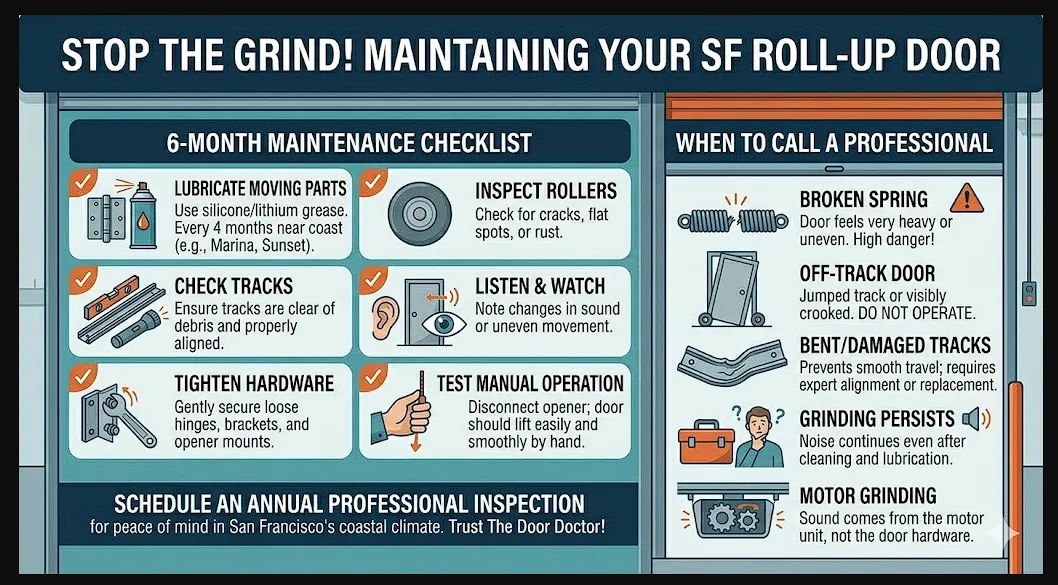
Roll-Up Door Maintenance Checklist
Staying ahead of problems is always better than reacting to them. Use this checklist to keep a roll-up door in good working condition throughout the year.
- Lubricate all moving parts every six months with silicone-based or lithium grease spray
- Visually inspect rollers for cracks, flat spots, or corrosion
- Check tracks for bends, gaps, or debris buildup
- Listen for any changes in how the door sounds during normal operation
- Test manual operation by disconnecting the opener and lifting the door by hand
- Hand-tighten loose hardware on hinges, track brackets, and the opener mount
- Schedule a professional inspection at least once a year
- Replace rollers proactively every five to seven years
- For doors near San Francisco Bay water exposure, including the Marina District, Embarcadero, and Outer Sunset, increase lubrication frequency to every four months
When To Call a Professional in San Francisco
Some roll-up door problems are manageable with basic maintenance. Others are not. Here are the clear signs that it is time to stop and call a licensed technician rather than attempting anything further on your own.
- The spring is visibly broken, or the door suddenly became very heavy
- The door has jumped off its track or is visibly leaning to one side
- The tracks are bent or pulled away from the wall
- The grinding noise persists after lubrication and debris removal
- The opener is making grinding or clicking sounds, even after the door checks out fine
- The door moves unevenly, pauses mid-travel, or reverses on its own
When looking for a garage door repair professional in San Francisco, choose a licensed and insured company with verifiable local reviews and experience with both residential and commercial roll-up door systems. The two are different in meaningful ways, and not every technician is equally qualified for both.
Be cautious of unusually low prices from unlicensed contractors. This is a known issue in the Bay Area service industry. A price that seems too good to be true usually reflects either unqualified labor, substandard parts, or both.
Take Action Before a Small Noise Becomes a Big Problem
A roll-up door that grinds is a door that is asking for attention. The good news is that most of the causes behind that noise are well-understood, diagnosable, and fixable when addressed at the right time.
Start with a visual inspection today. Check the rollers, look at the tracks, listen to where the sound is coming from, and clear out any debris. Suppose the noise stops after basic maintenance, great. If it continues, that is the signal to bring in a professional who knows roll-up door systems inside and out.
A properly maintained roll-up door in San Francisco should operate quietly and smoothly for 15 to 20 years. The same level of care applies to any commercial hollow metal door on the property. A little attention now goes a long way toward making sure it does exactly that.
Trust a Local San Francisco Expert To Get It Right
When it comes to roll-up door repair and maintenance in San Francisco, The Door Doctor has built a trusted reputation for getting the job done right the first time. With deep experience across both residential and commercial door systems, we bring the kind of hands-on expertise that San Francisco property owners rely on, whether it is a routine tune-up or an urgent repair that cannot wait. Our team understands the unique demands of Bay Area properties and shows up ready to diagnose, fix, and protect the door for the long haul. Do not wait for a grinding noise to turn into a full breakdown. Contact us today or give us a call, and let us keep your roll-up door running safely and smoothly for years to come.